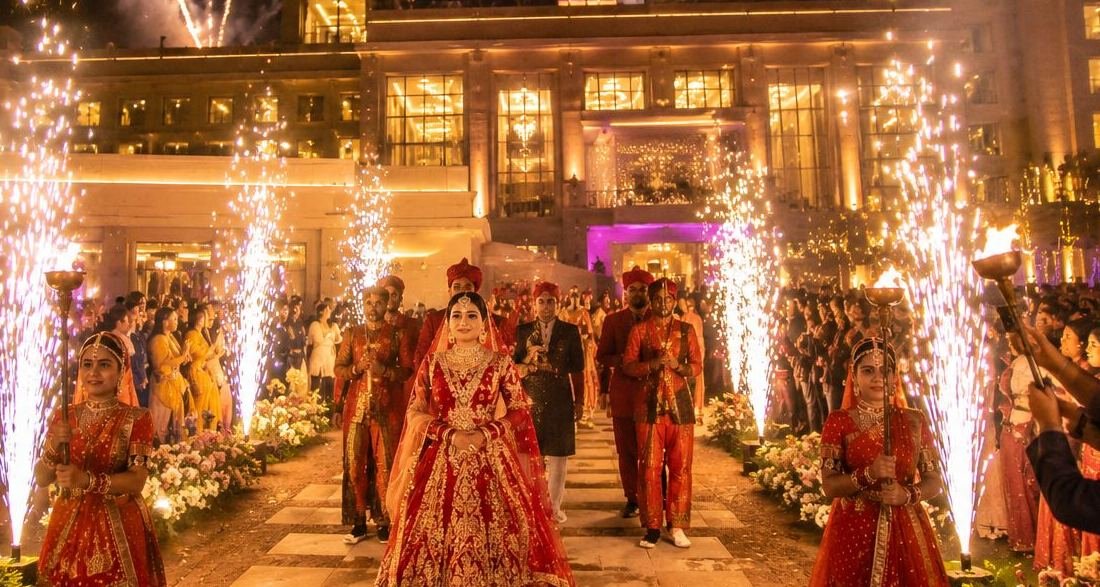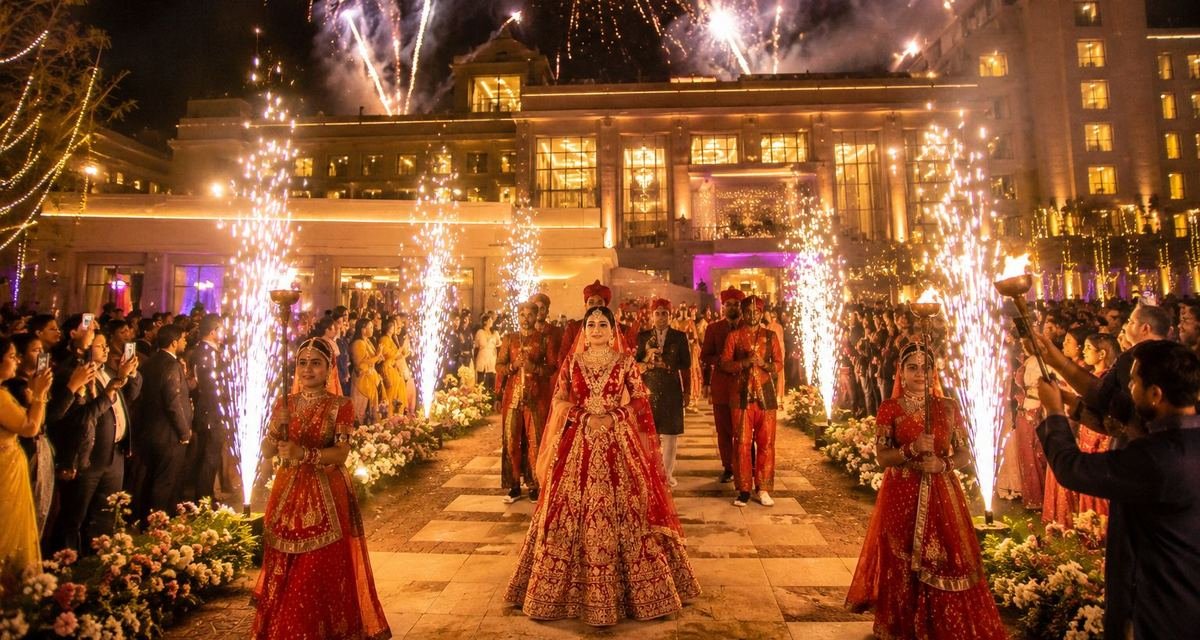
A wedding photography package is a bundle of three things: the type of coverage (traditional photos, candid photos, video, cinematic film, drone), the size of the team at each function, and what you receive afterwards (edited photos, albums, films and raw data). In Punjab cities, starting prices for wedding photographers mostly sit between roughly Rs 40,000 and Rs 1.5 lakh, and full multi-day packages commonly run from about Rs 75,000 to Rs 4 lakh or more. Once you understand the parts, comparing packages becomes much easier.
The types of coverage, in plain words
Traditional photography is the posed, complete record of the wedding: every ritual, every relative on stage with the couple, the family groups your parents will ask for. It is usually paired with a traditional videographer who records the functions in full. Traditional photography is often quoted at roughly Rs 15,000 to Rs 50,000 per day.
Candid photography captures unposed moments: your father's face during the doli, cousins dancing at the jaggo, the laugh between laavan. A candid photographer moves around looking for stories rather than lining people up. It typically costs more, often roughly Rs 30,000 to Rs 1 lakh per day, because the lead photographer's eye and editing are what you are paying for.
Cinematic video is shot and edited like a short film, with music, slow motion and storytelling. It is usually delivered as a teaser, a highlight film of a few minutes and sometimes a longer edited film. It is different from the traditional video, which records everything in sequence.
Drone coverage adds aerial shots of the baraat, the venue and outdoor functions. It is usually an add-on of roughly Rs 10,000 to Rs 50,000. Drone flying is regulated in India and many venues and areas restrict it, so the photographer should confirm permissions in advance.
A pre-wedding shoot is a separate session before the wedding, often at outdoor locations. Expect roughly Rs 20,000 to Rs 1 lakh, more for destination shoots. It also helps you get comfortable in front of the team.
Candid vs traditional is not an either-or choice for most families. Candid gives you the story; traditional makes sure no relative is missing. That is why many families book both.
Team size for each function
The team should match the size and importance of each event. A common set-up looks like this, but ask your photographer what they recommend:
- Roka or chunni: often one photographer and one videographer, since these are usually smaller gatherings.
- Mehendi and sangeet: candid and traditional photographers, plus video. Lots of dancing and moving people to cover.
- Jaggo: a night event with low light and fast movement, so ask how they handle lighting.
- Maiyan at home: tight spaces and natural light; a smaller, nimble team works best.
- Anand Karaj: the team must know gurdwara etiquette, keep their heads covered, follow the rules about movement and positions in the darbar hall, and stay unobtrusive during the laavan.
- Baraat, milni and doli: fast-moving and emotional; you want both a candid shooter and video here.
- Reception: usually the largest team, with stage photos, candids, cinematic video and sometimes drone.
What you should receive
Deliverables are where packages that look similar turn out to be very different. Get each of these written with numbers:
- Edited photos: how many, roughly, and what level of editing. Colour correction for every image and detailed retouching for a selection are not the same thing.
- Album: how many pages or sheets, what size, what kind of cover and paper, and who selects the photos.
- Highlight film: approximate length and number of songs.
- Full film: whether a long edited film or the full traditional video is included, and how long it runs.
- Teasers and reels: how many short clips for social media, and when.
- Raw data: whether you get all unedited photos and footage, in what format, and whether you need to supply a hard drive.
How long delivery takes
Timelines vary a lot with the season and the studio's workload. As a rough guide, edited photos often arrive within a few weeks to two months, cinematic films within one to three months, and albums take longer because they are printed only after you select the photos. During peak season, which runs roughly from November to February in North India, everything can take longer.
The single most useful thing you can do is put delivery dates in the contract, along with what happens if they are missed.
What drives the cost
- The number of functions and days covered.
- Team size and how many separate photographers and cinematographers work each event.
- The lead photographer's experience and demand.
- Whether you want a cinematic film, a drone, a pre-wedding shoot or same-day edits.
- Album size, paper and binding.
- Travel, food and stay for the team, especially for outstation or destination weddings.
- Your date: peak-season weekends and popular muhurat dates book out first and are rarely discounted.
If you need to cut costs, reduce coverage at smaller functions rather than downgrading the main wedding team, and ask whether the album can be smaller while keeping all edited photos.
Contract checklist
Before you pay an advance, make sure the agreement covers:
1. The dates, functions and hours covered, and the overtime rate if functions run late.
2. The names of the lead photographer and cinematographer who will attend, not just the studio name.
3. The team at each function, broken down by role.
4. Every deliverable with numbers: edited photo count, album pages, film lengths, reels and raw data.
5. Delivery dates for each deliverable.
6. Backup: second cameras, memory cards, and how and for how long they store your data.
7. Music: how they choose tracks for films and whether the films can be shared online without problems.
8. The payment schedule, with amounts and milestones, and whether taxes are included.
9. Cancellation and postponement terms, including whether the advance moves to a new date.
10. Travel, food and stay responsibilities for the team.
Frequently asked questions
Do we need both candid and traditional photography? For most Indian weddings, yes. Traditional coverage records every ritual and relative, while candid photography captures the emotions and moments in between.
How much does a wedding photographer cost in Punjab? Listed starting prices in larger Punjab cities often fall between roughly Rs 40,000 and Rs 1.5 lakh, and multi-day packages with candid, traditional and cinematic coverage can run from about Rs 75,000 to Rs 4 lakh or more.
Is a cinematic wedding film worth it? If you want something you will actually rewatch and share, a well-made highlight film usually gets far more views than a full-length video, while the traditional video stays as the complete record.
How long does it take to get the wedding album? Usually a few months, because the album is designed and printed only after you select your photos. Agree on a date in writing.
When you're ready to compare packages side by side, you can browse verified wedding photographers in your city on Set My Event and request itemised quotes.