

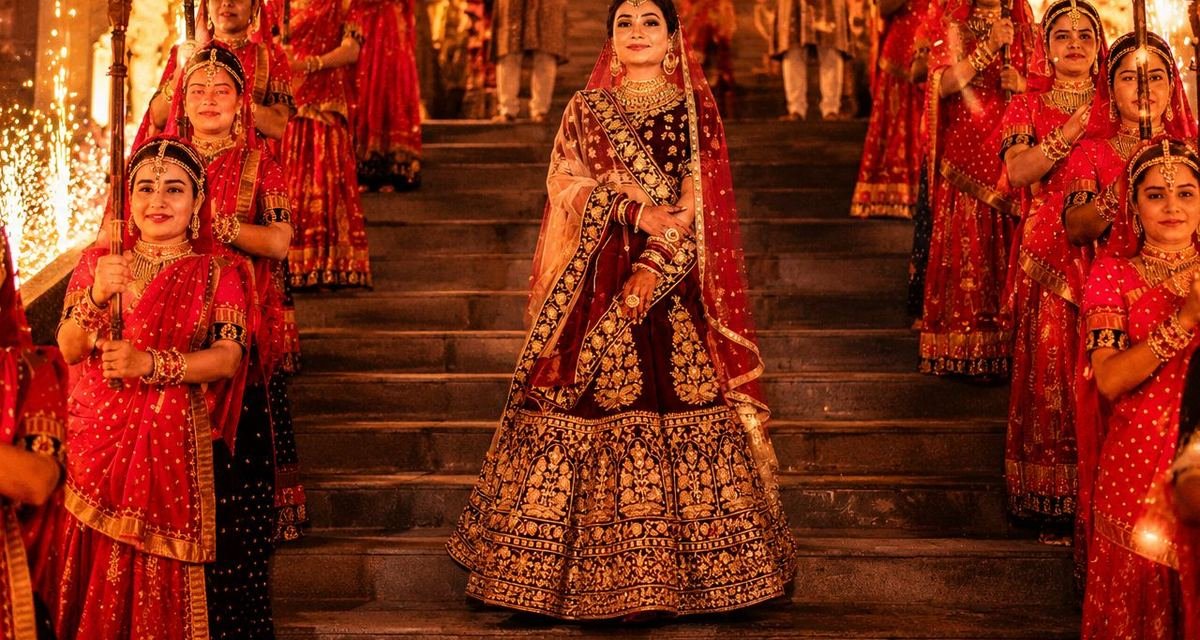
Choosing a bridal lehenga comes down to four decisions made in the right order: your budget, the function you will wear it for, a fabric and weight you can actually move in for hours, and a silhouette that suits your body. Fix those first and the endless scrolling becomes a short list. Then order at least three to four months before the wedding, leaving room for two fittings and alterations.
Start with budget and the buy, rent or designer question
Store-bought bridal lehengas from wedding markets and established shops commonly fall roughly between Rs 20,000 and Rs 80,000, with pure silks, velvets and more handwork towards the top of that band. Below it you will mostly find lighter, machine-embroidered pieces better suited to other functions. Designer labels typically start from around Rs 1 lakh to Rs 2 lakh and run into many lakhs. Prices vary widely by city, fabric and workmanship, so use these as rough markers when you visit stores.
Whatever you spend, keep some money aside for blouse stitching, alterations, a second dupatta, can-can, latkans and the final press.
Your three routes, briefly:
- Buying from a store: the most choice in person, room to negotiate, and you keep the outfit. Alterations may or may not be included, so ask.
- Renting: sensible if you want a heavy designer look for one day. Check the condition in daylight, how much fitting adjustment is allowed, the security deposit, cleaning charges and the exact return date.
- Ordering from a designer: a made-to-order or customised piece with proper fittings. It costs more and needs the longest lead time.
Your timeline, from first visit to wedding day
1. Five to six months before: browse, save references and decide your budget and colour family. If you are going to a designer or want heavy customisation, place the order now; complex handwork can take months.
2. Three to four months before: finalise and order a store-bought or semi-custom lehenga. Get the delivery date, alteration terms and fitting schedule written on the bill.
3. Six to eight weeks before: first fitting. Wear the heels you will wear on the day and the same innerwear.
4. Two to three weeks before: final fitting. Sit, walk, climb a few steps and raise your arms. Check the blouse closes comfortably after a heavy meal.
5. One to two weeks before: collect the outfit, try it with your jewellery and keep it hanging in a breathable cover.
In peak winter season, tailors and boutiques in Punjab are flooded with orders, so don't leave alterations to the last fortnight.
Fabric, weight and the realities of the day
Velvet is rich and warm, and it is a natural choice for December and January weddings. Raw silk and brocade hold structure well and photograph beautifully. Net, organza and georgette are lighter and kinder in summer heat. Heavy zardozi, dabka and stone work add both glamour and kilos.
Think about what you will actually do in the outfit. At an Anand Karaj you sit on the floor in the gurdwara and walk the four laavan around the Guru Granth Sahib with your head covered, so a lehenga you can sit and walk in easily, with a dupatta that stays securely on your head, matters more than maximum volume. Many brides keep their heaviest, most dramatic outfit for the reception.
Ask the store how heavy the complete outfit is, then wear it for at least twenty minutes before you decide. If your shoulders ache by then, they will hurt by the doli.
Colour and choosing for your body type
Red, maroon and deep pink remain the classic choices for Punjabi brides, while pastels, ivory and peach are popular for day weddings and receptions. Hold fabrics against your face in daylight, not just under store lights, and notice which shades brighten your skin rather than flatten it.
Silhouette matters more than the latest trend:
- Petite: smaller motifs, vertical lines and a moderate flare keep you from being swallowed by the outfit.
- Tall: bold borders, big motifs and full flare look striking.
- Pear-shaped: an A-line skirt with a more embellished blouse and dupatta balances the hips.
- Fuller midsection: a longer blouse or jacket-style choli, a V or sweetheart neckline and a softer flare look elegant.
- Curvy or plus-size: well-structured blouses and fabrics that drape rather than stand stiffly out; ask for a lighter can-can.
A good store assistant or designer will suggest options for your shape if you ask honestly.
Matching with makeup and jewellery, and draping the dupatta
Take a fabric swatch or clear daylight photos of your lehenga to your makeup trial so the artist can plan lip and eye colours around it. Your neckline decides the necklace: high necks suit chokers, while deep or sweetheart necks leave room for a longer rani haar. Match the metal tone of your jewellery to the embroidery, gold with gold zari and silver-toned work with diamonds or silver-finish pieces, and think about how your chooda colour will sit next to the outfit.
Many brides now carry two dupattas: one pinned on the head and a second draped on the shoulder or arms. Decide your draping style early, whether on the head for the ceremony, one shoulder or cape-style, and tell your makeup artist, because dupatta setting is often done by their team. Do a practice drape with your hairstyle at the trial.
For the groom: sherwani, achkan and the Punjabi groom's look
A sherwani is a long, structured coat worn over a kurta with churidar or straight pants. An achkan is similar but usually slimmer and more fitted. A bandhgala or jodhpuri suit is a shorter, sharper option for the reception. Sherwanis can be bought ready-made, ordered, or rented for the day.
The Punjabi groom's look usually brings together a turban (pagg) in a colour coordinated with the bride's outfit, a kalgi on the turban, a sehra for the baraat, and juttis. Many Sikh grooms also carry a kirpan for the Anand Karaj. Book someone experienced to tie the pagg on the morning, and practise sitting cross-legged in the sherwani and churidar before the day.
Order or finalise the groom's outfit two to three months ahead, with a fitting a few weeks before, and coordinate colours with the bride without matching exactly.
Frequently asked questions
How many months before the wedding should I buy my bridal lehenga? At least three to four months for a store-bought piece, and five to six months or more for designer or customised work.
How heavy should a bridal lehenga be? There is no right number. Choose one you can comfortably wear, sit and walk in for several hours, especially if you have a morning ceremony and an evening function on the same day.
Is it a good idea to rent a bridal lehenga? It can be, for a designer look at lower cost. Inspect it carefully, confirm what fitting changes are allowed, and get the deposit and return terms in writing.
What colour lehenga is best for an Anand Karaj? Red, maroon and pink are traditional favourites, but many brides now choose pastels too. Check with your family about any preferences, and pick a shade that looks good in morning daylight.
When you're ready to shop, you can compare verified bridal and groom wear stores and designers in your city on Set My Event and visit them with a clear brief.