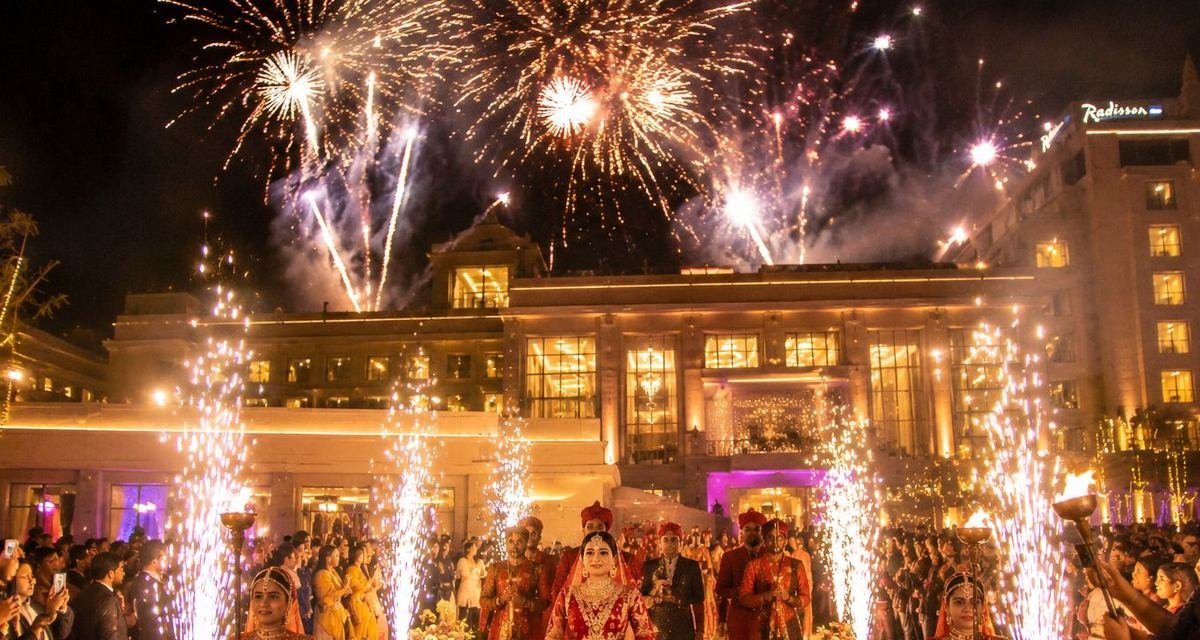
A destination wedding in India works best when you choose the place by season and guest count first, and by Instagram photos last. The most popular regions are Rajasthan's palace cities, Udaipur's lakes, the beaches of Goa, hill stations such as Mussoorie and Shimla, and Kerala's backwaters and coast. The cost is driven mainly by how many guests you host, for how many nights, and how far everyone (including your vendors) has to travel. Plan to book the venue 9 to 12 months ahead, especially for dates between November and February.
Choosing a region
Each region suits a different kind of wedding. Think about how your guests will get there, what the weather will be on your dates, and whether the setting fits the functions you want to hold.
Rajasthan's palace and fort properties suit large, grand weddings with a royal feel: courtyards for the sangeet, lawns for the pheras, and plenty of local craftspeople, folk musicians and decor suppliers. Jaipur and Jodhpur are well connected by air and rail.
Udaipur deserves its own mention because of the lakes. Lakeside and island settings make a stunning backdrop for the main ceremony, but venues with lake views are in heavy demand on peak dates, and moving a large baraat through the old city's narrow lanes needs planning.
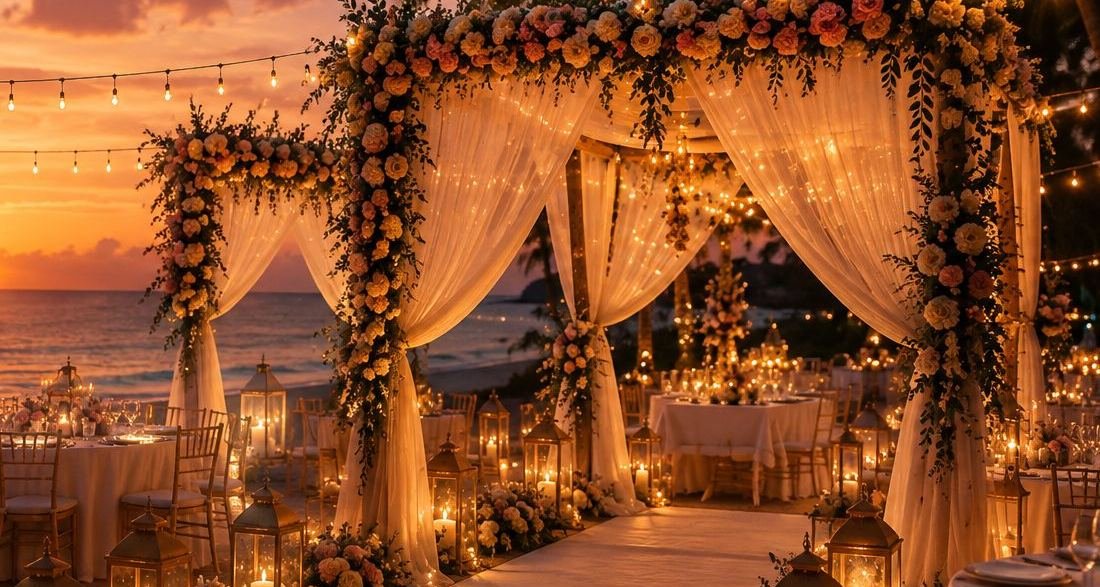
Goa suits relaxed, younger crowds and evening functions on the sand. Beach mandaps photograph beautifully, but sea breeze, sand and humidity affect decor, sound and makeup, so ask vendors how they handle them.
Hill stations like Mussoorie and Shimla suit smaller, intimate weddings. For families in Punjab and Chandigarh they are a drive rather than a flight away, which makes guest travel far simpler. The trade-offs are limited flat land for large lawns, winding roads for buses, and fewer large venues.
Kerala offers backwaters, beaches and lush greenery, and suits couples who want something calm and different. It is a longer journey for most North Indian guests, so expect a smaller turnout.
Weather by season
Season matters more than almost anything else, and the right months differ by region.
- Rajasthan and Udaipur: October to March is the comfortable window. Summer from April to June is extremely hot, and outdoor daytime functions become difficult.
- Goa: November to February is the dry, pleasant season. The monsoon, roughly June to September, brings heavy rain and many beach activities stop.
- Hill stations: March to June and September to November are generally pleasant. December to February can be very cold, with snow in some places, and the monsoon brings landslide and road-closure risks.
- Kerala: the drier months from December to February are the safest. The southwest monsoon is heavy from around June, and the region also gets rain later in the year.
Whatever you choose, ask every venue for a covered or indoor backup plan.
What drives destination wedding cost
There is no single price for a destination wedding, because the same venue can cost wildly different amounts depending on how you use it. These are the main drivers:
- Guest count: every extra guest adds rooms, meals, transport and gifting, not just a plate at dinner.
- Rooms multiplied by nights: this is usually the biggest line. Forty rooms for three nights is 120 room-nights; cutting one night or twenty guests changes the total sharply.
- Venue buyout or minimum guarantee: many properties ask you to book a minimum number of rooms or take over the whole property on peak dates.
- Travel: flights or trains for the immediate family, and sometimes for many guests, plus local transfers between the airport, hotel and venue.
- Vendor travel: if you bring your own photographer, makeup artist, DJ or decorator from home, you pay for their travel, stay and food on top of their fee.
- Season and day of the week: peak winter dates and weekends cost noticeably more than off-season weekdays.
- Number of functions: each additional event needs its own decor, sound, lighting and catering.
Ask venues for a written quote that separates room rates, food per plate, venue hire, taxes and service charges, so that you can compare like for like. Also check what the venue lets you bring from outside, such as decorators, caterers or alcohol, and what it charges for doing so.
Managing guests away from home
Guest management is where destination weddings succeed or fall apart. Decide early who you will host fully, who will be offered a room at your cost, and who pays their own way, and communicate it clearly in the invitation.
1. Send a save-the-date 4 to 6 months ahead so guests can book leave and tickets.
2. Collect names, arrival and departure details, and room-sharing preferences in a simple shared sheet.
3. Allot rooms with care, putting elders close to the venue and away from late-night sangeet noise.
4. Arrange pickups from the nearest airport or railway station, with one person tracking arrivals on the day.
5. Put a short itinerary in every room: function timings, dress codes, the venue map and a helpline number.
6. Keep a hospitality desk at the hotel for the whole stay, staffed by someone who knows the plan.
Planning timeline
- 12 to 9 months before: fix the region, season, budget and approximate guest count; visit and book the venue.
- 9 to 6 months before: book the photographer, decorator and any vendors travelling from home; block hotel rooms.
- 6 to 4 months before: send save-the-dates, plan travel for the family, finalise the functions.
- 3 to 2 months before: send invitations, confirm the rooming list, book local transport.
- The last month: final headcount to the venue, vendor run sheet, welcome kits and a contingency plan for weather.
Registering your marriage
A destination wedding is legally the same as any other wedding in India. After the ceremony, register your marriage in the usual way under the law that applies to you; depending on the state and the law that applies, this is done where the wedding took place or where one of you lives, so requirements differ. Check the documents and witnesses you need with the registrar's office in advance, and keep your ceremony photos and invitation card handy, as they are often asked for.
Frequently asked questions
Which is the best place for a destination wedding in India? There is no single best place. Rajasthan and Udaipur suit grand winter weddings, Goa suits relaxed beach celebrations, hill stations suit smaller weddings within driving distance of North India, and Kerala suits couples who want greenery and calm.
How far in advance should we book a destination wedding? Aim for 9 to 12 months ahead for the venue, particularly for November to February dates, and send save-the-dates 4 to 6 months before.
Is a destination wedding cheaper than a wedding at home? It can be, if you invite far fewer guests. With a large guest list, rooms, travel and vendor travel usually make it more expensive than a hometown wedding.
How many guests are ideal for a destination wedding? It depends on your budget and the venue's room inventory. Start from the number of rooms the property can offer and work backwards to your guest list.
When you're ready to start shortlisting, you can compare verified destination wedding planners and venues on Set My Event and ask each for a detailed, itemised quote.