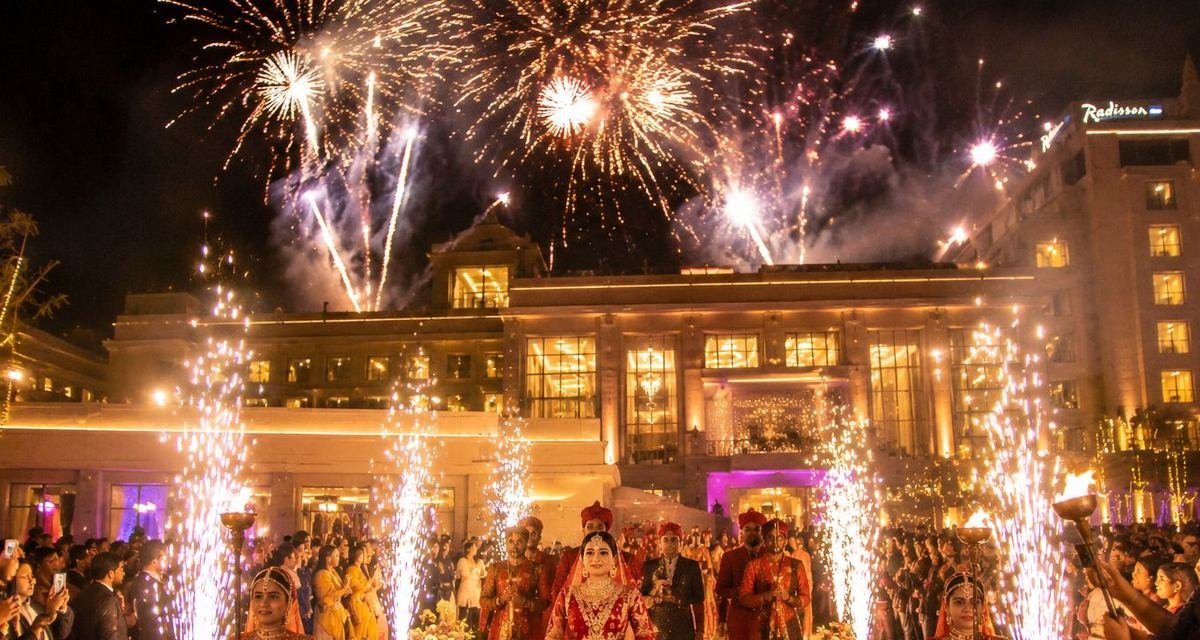
You need a wedding planner if your family does not have the time, the people or the experience to manage a dozen vendors across several functions, or if you are marrying away from home. You probably don't need full planning if the wedding is in your own city, the guest list is manageable, and you have two or three organised relatives who can take charge. For most families the honest answer sits in between: a partial planner or a day-of coordinator gives you a calm wedding day without paying for services you would do yourselves.
Full planning, partial planning and day-of coordination
These three terms get used loosely, so ask every planner exactly what their package covers. In general:
- Full-service planning: the planner is involved from budget and venue selection onwards, shortlists and negotiates with vendors, designs the look of each function, manages guest logistics and runs every event on the day.
- Partial planning: you book some vendors yourselves (often the venue, caterer and photographer, because families have strong opinions on these) and the planner fills the gaps, coordinates everyone and runs the functions.
- Day-of coordination: you plan everything, and a coordinator takes over a few weeks before the wedding, confirms every vendor, builds the run sheet and manages the actual days so that your family can be guests.
For a Punjabi wedding, day-of usually means several days: roka or chunni may be done quietly, but the mehendi, sangeet, jaggo, maiyan, the Anand Karaj or pheras, the reception and the doli each have their own timing and vendors. Confirm how many functions and hours are included, and how many people from the planner's team will actually be present at each one.
What a planner actually does
The value of a good planner is mostly invisible. They know which caterer can really serve 600 people in an hour, which decorator finishes on time, and which venue staff need chasing. In practice the work looks like this:
- Building a realistic budget and tracking every payment against it.
- Shortlisting vendors, comparing quotes like for like and reading the fine print in contracts.
- Designing the flow of each function, from the baraat route to when the DJ should stop for the jaimala.
- Managing guest lists, room allotments, transport and welcome kits if guests are travelling.
- Running the day: vendor arrival times, a backup for rain, someone holding the ring, the shagun register and the emergency kit.
What they usually don't do is pay vendors on your behalf without your approval, and they shouldn't. Keep the money decisions in the family's hands.
How wedding planner fees work in India
Indian planners generally charge in one of two ways, sometimes a mix of both.
A flat fee is a fixed amount for an agreed scope, such as full planning for four functions and 300 guests. It is easy to budget for and doesn't rise if you upgrade the decor. Full-service planners commonly quote somewhere from around Rs 2 lakh to Rs 10 lakh or more, depending on the city, the size of the wedding and the planner's reputation; luxury and destination planners charge more.
A percentage fee is charged on the total wedding spend the planner manages, commonly quoted somewhere between 5 and 20 percent depending on the scope. It scales with the wedding, but read the agreement carefully: is the percentage calculated on the whole budget or only on what they book? Does it include the venue?
Also ask whether the planner earns commission from vendors or venues. Commission is common in the industry and isn't automatically wrong, but you should know about it, and a planner who earns both a fee and a hidden commission has a reason to steer you towards particular vendors.
All these figures vary a lot by city, season and inclusions, so treat them as a starting point and get written quotes from at least three planners. Day-of coordination is priced well below full planning because the scope is much smaller; ask for a quote based on your number of functions.
Red flags to watch for
- They can't show you complete weddings they have planned, only mood boards and borrowed photos.
- They push vendors hard and won't share vendor contracts or bills with you.
- The quote is vague ("everything included") with no list of functions, hours or team size.
- They want most of the money upfront, in cash, with no written agreement.
- The person who sold you the package won't be present on the wedding day, and they can't tell you who will be.
- They promise things no one can promise, like guaranteed good weather or a sold-out venue on a peak date at a discount.
Questions to ask before you sign
1. Which functions, and how many hours at each, does this package cover?
2. Who will be our main point of contact, and who will be on site on each day?
3. Is your fee flat or a percentage, and on which amount is the percentage calculated?
4. Do you receive commission from any vendors you recommend?
5. Can we book our own vendors, and will you coordinate with them without an extra charge?
6. What is the payment schedule, and what happens to the advance if we postpone or cancel?
7. How do you handle a vendor who doesn't turn up?
Get the answers in a written agreement that lists the scope, team size, fee, payment dates and cancellation terms.
When your family can manage without one
Plenty of North Indian weddings run beautifully without a planner. It works when the venue is a banquet hall or marriage palace that provides catering, decor and staff as a package, because the venue manager effectively coordinates most of it. It works when the wedding is in your home town and the vendors are people the family has used before. And it works when you assign clear roles: one cousin handles vendors and timings, one handles guests and rooms, one handles the money and the shagun register.
If you go this route, make a single run sheet for every function with vendor names, phone numbers and arrival times, and share it in a WhatsApp group the day before. Many families also hire a day-of coordinator only for the main wedding day and reception, which is a sensible middle path.
Frequently asked questions
Is a wedding planner worth the cost in India? It is worth it when the wedding is large, spread across several functions or away from home, because a good planner prevents expensive mistakes and saves the family weeks of running around. For a small, local wedding with a package venue, a day-of coordinator is often enough.
How far in advance should I book a wedding planner? For a full-service planner, book as soon as you have a rough date and budget, ideally 6 to 9 months ahead for the November to February season. Day-of coordinators can usually be booked 2 to 3 months out.
What is the difference between a wedding planner and a day-of coordinator? A planner helps you make the decisions and book the vendors; a day-of coordinator takes your finished plan and makes sure it runs smoothly on the day.
Can a planner work within a small budget? Yes, many do. Be upfront about your total budget from the first meeting so they can tell you honestly what is possible and which services you can skip.
Whichever route you choose, meet at least three planners or coordinators and compare their written scope, not just the fee. Set My Event lists verified wedding planners you can contact directly.