A good wedding DJ booking comes down to five things: sound and lighting sized to your guest count and venue, a music plan the DJ genuinely understands, timings that respect venue and local noise limits, reliable power backup, and a written contract that lists every inclusion. On price, most local and mid-range wedding DJs in India quote roughly Rs 10,000 to Rs 1 lakh per event, while packages with full lighting, LED walls and a dance floor, or well-known DJs, go well beyond that. Rates vary a lot by city, season, hours and equipment, so treat these as broad ranges and compare itemised quotes.
Match the sound system to your guests, not to the DJ's ego
Louder is not better. A system too big for a banquet hall sends the elders out to the lobby; one too small leaves the back of an open lawn hearing nothing.
As a rough guide, a mehendi at home or a small roka with 50 to 80 guests usually needs only a pair of good powered speakers and perhaps one subwoofer. A sangeet in a banquet hall with a few hundred guests typically calls for speakers on both sides of the stage, subwoofers and a monitor for the DJ. A large open-air function needs more even coverage, which often means extra speakers placed further back so the last rows can hear without the front rows being blasted.
Tell the DJ the venue, the hall or lawn size, your expected numbers and where the stage and dance floor will be. A serious DJ will ask these questions before quoting. Also ask them to keep the speakers pointed away from the tables where your grandparents will sit, and to bring at least two wireless microphones for speeches, the anchor and performances.
Lights, LED walls, truss and the dance floor
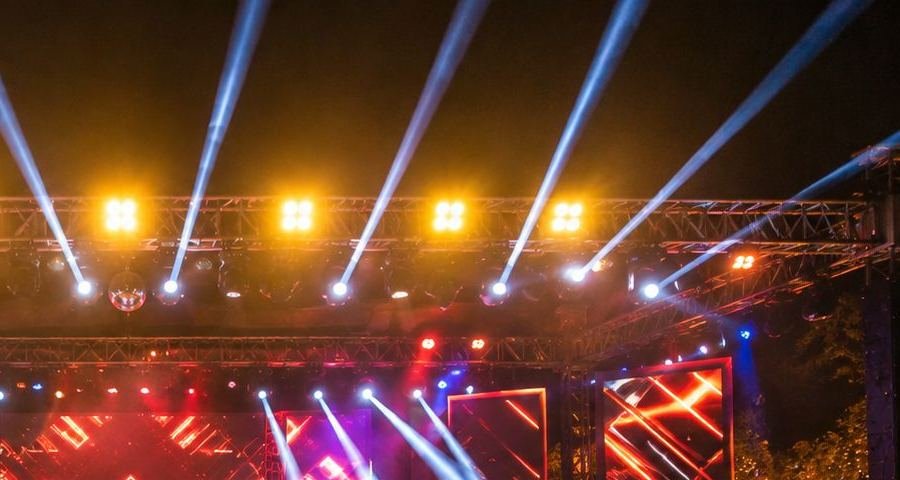
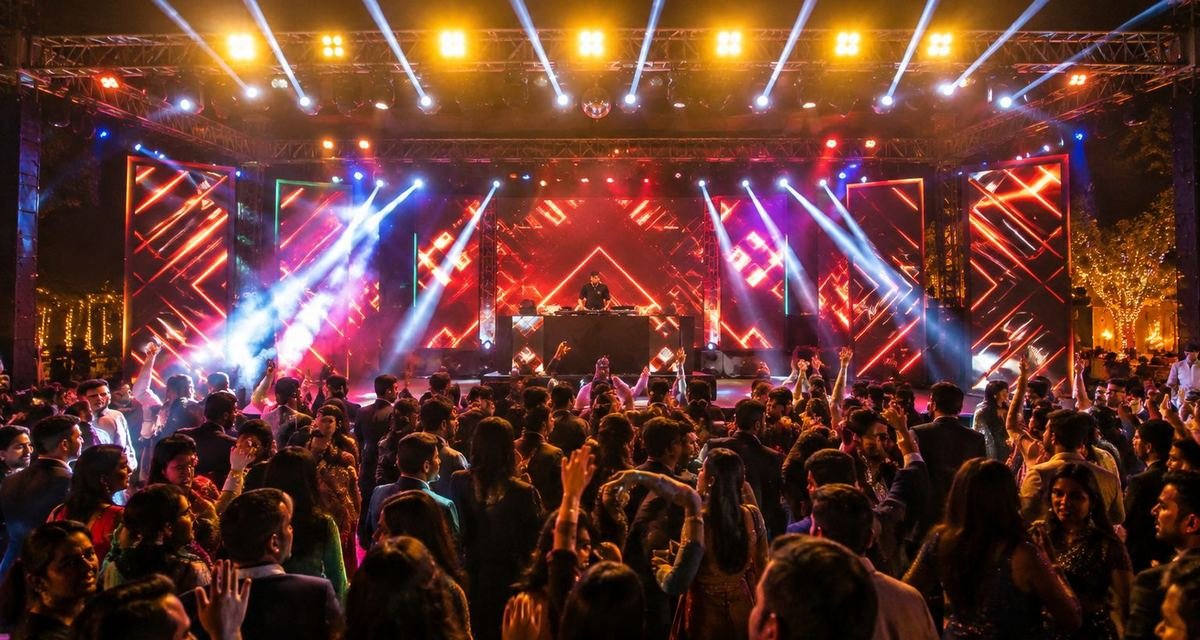
Lighting is where quotes differ the most, so ask for it as a separate line item. A basic package usually covers coloured wash lights and a few moving heads. Larger setups add a truss (the metal frame that holds lights above the stage or dance floor), haze, LED walls and a lit dance floor.
- Truss: check that the venue allows rigging and that the ceiling height suits it.
- LED wall: useful for the couple's names, sangeet videos and photo montages, but confirm who prepares and plays the content.
- Dance floor: size it for the number of people you realistically expect dancing at once, not the whole guest list.
- Effects: smoke, cold pyro and confetti are often restricted by venues, so get approval first.
Plan the music together: do-play and don't-play lists
The best wedding DJs read the crowd, but they still need your direction. About two weeks before the wedding, send one clear document rather than scattered WhatsApp messages.
- A short must-play list for each function, around 10 to 15 songs, not 60.
- A don't-play list: songs with crude lyrics in front of elders, songs linked to an ex, sad breakup tracks, anything a family member is sensitive about.
- Entry songs for the couple and for any family entries, with the exact version and start point.
- Songs for specific moments: cake cutting, the couple's first dance, the moment the floor opens.
- Your preferred mix of Punjabi, Bollywood and English, and whether the older crowd will want some classic Punjabi folk and boliyan-style tracks.
- A note asking for clean or radio edits where they exist.
If there are sangeet performances, give the DJ one folder with every performance track labelled in running order (01 Cousins, 02 Parents and so on), plus a backup on a pen drive. Half the stage delays at sangeets come from someone searching for the right track on a phone.
Announcements, the dhol and keeping the night flowing
Many DJs also handle announcements. Decide early whether your DJ will MC or whether you are hiring a separate anchor, so two people are not fighting over the microphone. If the DJ is announcing, share a list of names with pronunciation, the order of family entries and any announcements you do not want made.
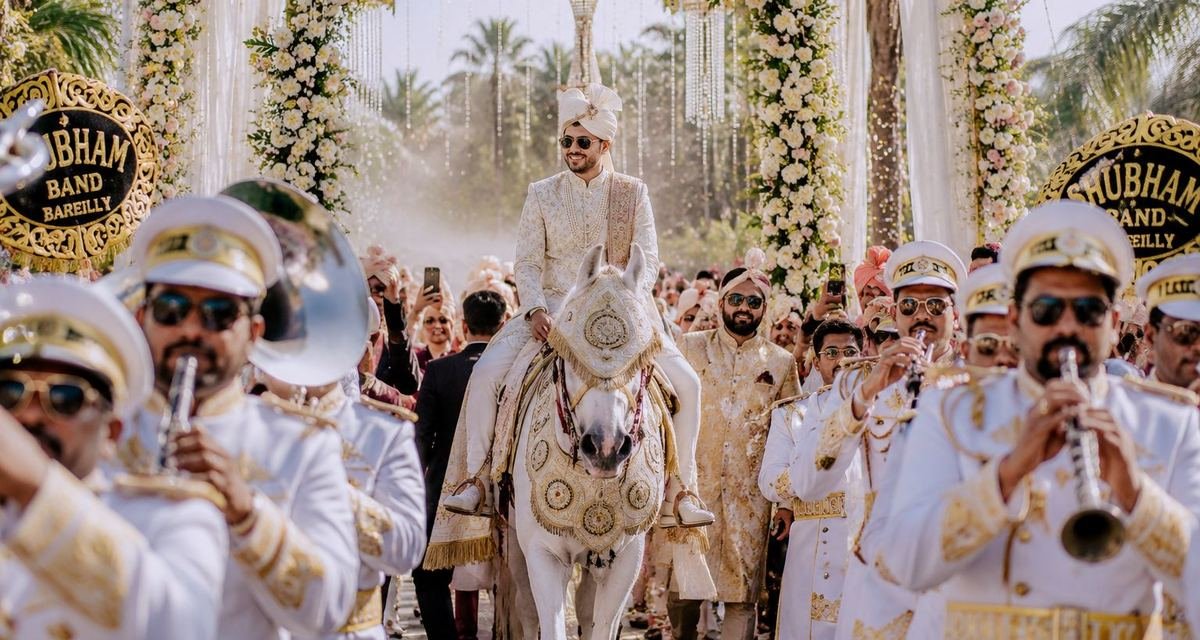
At Punjabi functions, the dhol and the DJ often play together for bhangra. This works brilliantly when the dhol player and DJ have agreed beforehand which tracks they will play over and when the dhol will take over, and badly when they are both trying to lead.
Timings, noise rules and power backup
Ask your venue, in writing, what time amplified music must stop and whether there is a sound limit. India's noise rules restrict loudspeaker use at night in open areas, with limited exceptions, and many venues and local authorities enforce a fixed cut-off for outdoor events. Indoor halls may allow later timings. Plan your best dance songs before the cut-off rather than assuming the party can run till 2 am, and check the local rules for your area if the function is at home or on a farm.
Also agree on set-up time. A DJ with truss and lights may need several hours before guests arrive, and the sound check should finish before the first guest walks in.
Power failures are the most common reason music stops. Ask the DJ how much load their equipment needs, make sure the venue or generator can carry it on a separate line from the catering equipment, and ask whether they bring a UPS for the mixer and laptop so the music does not cut out when power switches to the generator.
Questions to ask, and what to put in writing
1. Can I see unedited video from a recent wedding, not just a highlights reel?
2. Will you personally play on the day, or someone from your team?
3. What exact speakers, subwoofers, lights and mics are included for my guest count and venue?
4. Are truss, LED wall, dance floor and effects included or charged separately?
5. How many hours does the quote cover, and what is the overtime rate?
6. How much power do you need, and do you bring backup equipment and a UPS?
7. Are travel, food and stay extra if the venue is outside your city?
Once you choose, get the date, venue, set-up time and playing hours in writing, along with the name of the DJ who will play, an itemised equipment list, the overtime rate, the advance and balance schedule, and the cancellation and postponement terms. Add what happens if equipment fails or the DJ falls ill, and whether GST, travel and transport are included.
Frequently asked questions
How much does a DJ cost for a wedding in India? Most local and mid-range DJs quote roughly Rs 10,000 to Rs 1 lakh per event, with large lighting setups and well-known names costing more. The final figure depends on city, season, hours and equipment, so compare itemised quotes rather than headline prices.
How early should we book a wedding DJ? In peak wedding season, roughly November to February, booking three to six months ahead is sensible, especially for weekends and popular dates. Off-season dates are more flexible.
Can the same DJ do the sangeet and the reception? Yes, and many offer a better rate for multiple functions. Check that there is enough time to dismantle and reset the equipment if the two events are back to back.
How is DJ booking for a sangeet different from a reception? A sangeet needs more microphones, performance tracks played on cue and closer coordination with the anchor, while a reception usually needs softer music during dinner before the floor opens.
Shortlist two or three DJs, ask each for a video from a recent wedding (not a club night), and compare quotes on the same equipment list. Set My Event lists verified DJs and sound providers by city.