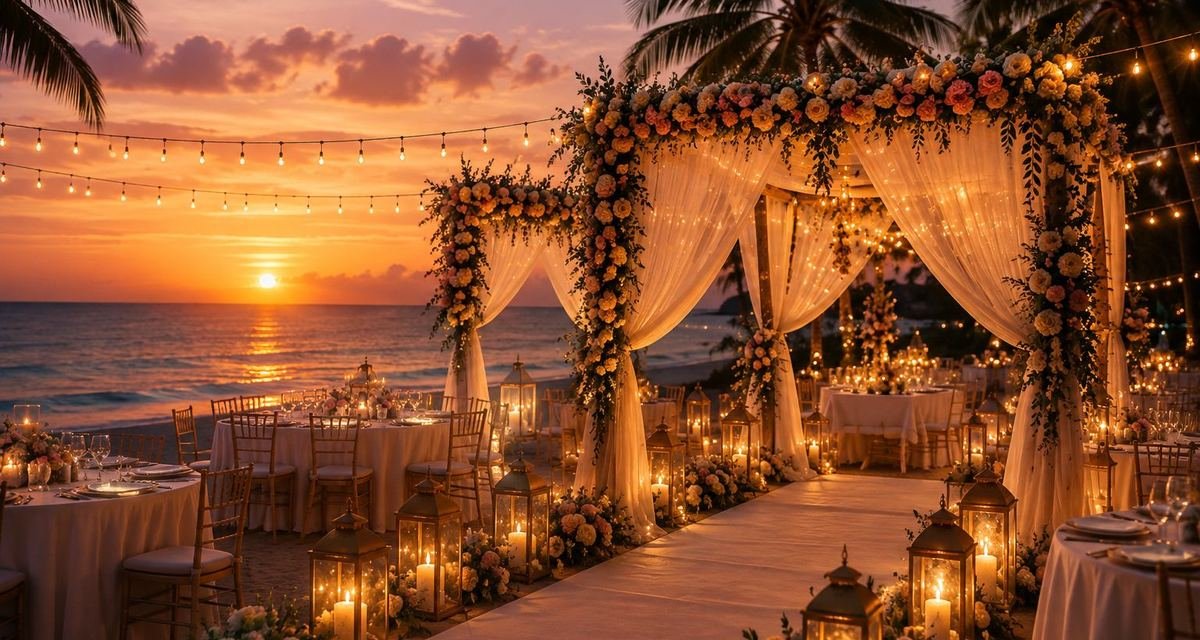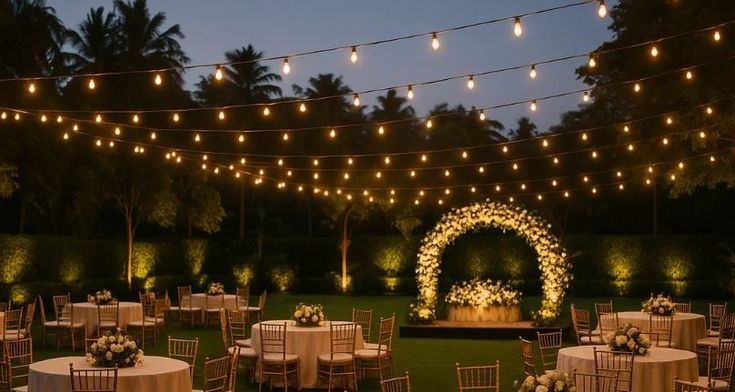
For a wedding at home, on a farmhouse or on an open lawn, the tent house supplies almost everything a venue normally would: the covered structure, flooring, furniture, stage, lighting, heaters or coolers, and often the generator. The tent price depends mostly on the type of structure and the area you cover. As a rough reference, online supplier listings for a bare German hanger structure commonly show around Rs 25 to Rs 50 per sq ft, while a complete setup with flooring, draping, lighting and climate control costs several times that. Rates vary a lot by city, season and inclusions, so get itemised quotes from two or three tent houses after a site visit.
Shamiana, pandal or German hanger?
Shamiana. The classic open-sided canopy on poles, often in printed or coloured cloth. It is quick to put up, affordable and perfect for daytime functions like an akhand path bhog, mehendi or haldi at home. It gives shade but little protection from wind, rain or cold.
Pandal. A framed structure with a roof, side walls, a gate and fabric draping inside. It suits evening functions and larger gatherings, and can be closed on the sides in winter. It is a common choice for the main functions at home weddings in Punjab.
German hanger. A pillar-less aluminium frame with a waterproof PVC cover. Because there are no poles in the middle, you get a clean open floor for the stage, dance floor and buffet, and it can be closed up for heating or air-conditioning. It is the most expensive option, but it is the one to choose when the weather is uncertain or the guest list is large.
Many families combine them, for example a shamiana for the lunch area and a German hanger for the evening function.
Working out how much you need
Start with your largest function and work backwards.
1. Estimate the floor area from your guest count, allowing more space per person if everyone will sit for dinner rather than eat from a buffet. On top of that, leave room for the stage, dance floor, buffet counters, the bar and a waiting area near the entry.
2. Plan seating. Guests at a buffet move around, so you rarely need a chair for every single person, but grandparents and parents with small children should never have to hunt for one. Ask the tent house to suggest numbers based on your list. Add round tables for those who want to eat seated, plus sofas near the stage for close family.
3. List the extras. Buffet tables and covers, cocktail tables, a stage with steps and a backdrop, carpets or flooring, a bride's changing room, a separate covered area for the kitchen, and a toilet arrangement if the house does not have enough.
4. Walk the site with the tent house. Ground levels, drains, overhead wires, trees and the gate width all affect what can be built and where. A good tent house measures the site before quoting.
Heaters, coolers and power
Wedding season in Punjab runs largely through the cooler months, and nights from December to January can be properly cold. Closed side walls, carpets and heaters rated for tent use make a big difference: electric heaters, or gas heaters only with good ventilation and following the supplier's guidance. Never use coal angithis or open fires inside a closed tent, because they can cause dangerous carbon monoxide build-up. Keep heaters away from fabric walls and drapes and make sure they are on stable ground.
For summer or monsoon functions, plan for air coolers or, in a German hanger, air-conditioning. Add fans near the stage and kitchen, and make sure the flooring is raised or covered if rain is possible.
Your home or farmhouse supply will almost never handle a full wedding load. Ask the tent house or electrician to add up the load of the lights, DJ, heaters or coolers, kitchen equipment and any AC, and size the generator from that. Check whether diesel is included, how many hours are covered, and whether there is a back-up generator for the main function. Place the generator well away from guests and the kitchen, with an operator on duty all evening.
Lighting the space
Lighting is where a basic tent becomes a beautiful one. Warm fairy lights along the ceiling and entrance, hanging bulbs over the lawn, chandeliers inside a pandal or hanger, uplighters on trees, and focused lights on the stage are the usual elements. Keep the stage and the couple's seating evenly lit, as this is what your photographer needs most. Light the paths, steps, parking and toilets too, since older guests walking in the dark is a real safety risk. Ask for a lighting plan rather than a vague "full lighting" line in the quote.
Safety you should not compromise on
- Fire extinguishers in the tent, near the kitchen and near the generator, with staff who know how to use them.
- Fire-retardant fabric where possible, and no candles or diyas near drapes.
- Cooking, tandoors and gas cylinders in a separate, ventilated area, not under the main tent.
- Clear exits on more than one side, kept free of furniture and decor.
- Wiring with proper insulated cables, no taped joints, circuit breakers and earthing, and cables covered or taped down on walkways.
- Fireworks and sky lanterns kept well away from the tent and from overhead wires.
- Ropes, pegs and poles visible or marked so guests do not trip at night.
Tent house checklist
- Site visit done and measurements agreed
- Type and size of tent for each function, with side walls if needed
- Flooring, carpets and stage with steps
- Chairs, sofas, round tables and buffet tables, with covers
- Heaters or coolers, with numbers written in the quote
- Generator capacity, diesel, operator and back-up
- Lighting plan, including paths, parking and toilets
- Fire extinguishers and safety measures
- Setup and dismantling dates and timings
- Advance, balance payment and damage or cancellation terms in writing
Frequently asked questions
How early should I book a tent house for a wedding? Four to six months ahead for peak-season dates, especially if you want a German hanger, as good suppliers have limited stock.
Is a German hanger worth the extra cost? For large evening functions, winter nights or any chance of rain, usually yes. For small daytime functions at home, a shamiana is often enough.
What is included in a tent house package? It varies, so ask for an itemised list. Typically the structure, flooring, furniture and basic lighting are included, while heaters, coolers, generators, stage decor and extra lighting may be charged separately.
Can the tent house also do the decoration? Many do, and combining them can save money, but compare their decor portfolio separately from their tent work before deciding.
When you are ready to compare quotes, you can browse verified tent, lighting and rental vendors on Set My Event and contact them directly about your site and dates.