For a typical family sangeet, start six to eight weeks before the function, and plan on roughly four to six sessions for the couple's dance, two to four sessions for each family group, one full run-through of the whole show, and one rehearsal on the actual venue stage. Book the choreographer two to three months ahead in wedding season. Fees vary widely: some choreographers charge per song or per act, often in the region of Rs 5,000 to Rs 25,000, while full family sangeet packages covering many acts can run from a few tens of thousands to over Rs 1 lakh. City, experience, travel and the number of performers all change the price, so ask exactly what each quote includes.
Plan the acts before you pick a single song
The most common mistake is choosing songs first and then trying to fit people into them. Start with who wants to perform: the groom's friends, the bride's cousins, the siblings, both sets of parents, the elders, the children and the couple. That gives you your list of acts.
Keep each act to about three to four minutes by using medleys cut tightly, and aim to keep the total performance time to around an hour. Beyond that, even proud relatives start looking at the food counters. If too many groups want to perform, merge some of them; a combined cousins act is usually better than three separate weak ones.
Decide early whether the bride's side and the groom's side are doing a joint sangeet or separate ones. In many Punjabi families each side holds its own ladies' sangeet and jaggo at home, and the stage show is a joint evening. That affects who rehearses together.
How many practice sessions, and where
A rough plan that works for most families:
1. Weeks 8 to 6: finalise acts and songs and get the music edited. The choreographer should already be booked.
2. Weeks 6 to 3: two to four sessions per group to learn the steps. Ask the choreographer to share videos of each section so people can practise between sessions.
3. Weeks 3 to 2: the couple's dance gets its remaining sessions, and groups start running their full songs.
4. Week 1: one full run-through of the whole show in order, with costumes if possible.
5. The day before or the morning of the sangeet: a rehearsal on the venue stage.
Home sessions are convenient, elders are more comfortable, and the choreographer can work with large groups in a big hall or rooftop, though you will usually pay travel charges. A studio gives you mirrors and fewer distractions, which helps beginners and couples. Many families learn at home and do the final polish in a studio.
Involving elders, and the couple's own dance
Your grandparents and parents do not need complex choreography; they need a moment. A short entry with a few simple steps, a wave of the dupatta or a playful walk across the stage usually gets the loudest cheer of the night. Avoid jumps, deep bends and fast turns for anyone with knee or back trouble, and give them a chair nearby.
In Punjabi families, a round of boliyan and giddha led by the mothers and aunts is a brilliant, traditional addition that needs very little rehearsal and brings the whole room together.
The couple's performance is usually the finale, so it deserves the most practice. Many couples choose a two-part piece: a slower romantic song that moves into an upbeat Punjabi or Bollywood number. Practise at least twice in the actual wedding outfit and footwear, because a heavy lehenga or a long sherwani changes every turn. Only include lifts if you are both comfortable, and practise them with someone spotting you, on a non-slip floor like the stage.
Song ideas that work at Punjabi and North Indian sangeets
These titles are popular choices at sangeets; mix and match them by group.
- High-energy group numbers: London Thumakda, Gallan Goodiyaan, Kala Chashma, Nachde Ne Saare, Proper Patola, Mundian To Bach Ke, Lamberghini.
- For the couple: Raataan Lambiyan, Kesariya, Tenu Leke, Kudmayi.
- For parents and elders: Mehendi Laga Ke Rakhna, Saajan Ji Ghar Aaye, Bole Chudiyan.
- For siblings and friends: Mere Yaar Ki Shaadi Hai, Sauda Khara Khara, Dhol Jageero Da.
Choose versions without crude lyrics if elders are watching, and ask the choreographer or a DJ to cut medleys cleanly so each act starts and ends on a strong beat.
A sample running order
1. Anchor welcome and the couple's entry.
2. Children's act, early in the evening before they get tired.
3. Groom's friends.
4. Bride's cousins.
5. Groom's parents.
6. Giddha and boliyan by the ladies of the family.
7. Bride's siblings.
8. Bride's parents.
9. A short elders' entry or a photo-and-video montage of the couple.
10. The couple's dance, followed by the anchor opening the dance floor.
Alternating between the two families keeps both sides engaged, and saving the couple for last gives the show a natural high point.
Venue stage rehearsal, costumes and props
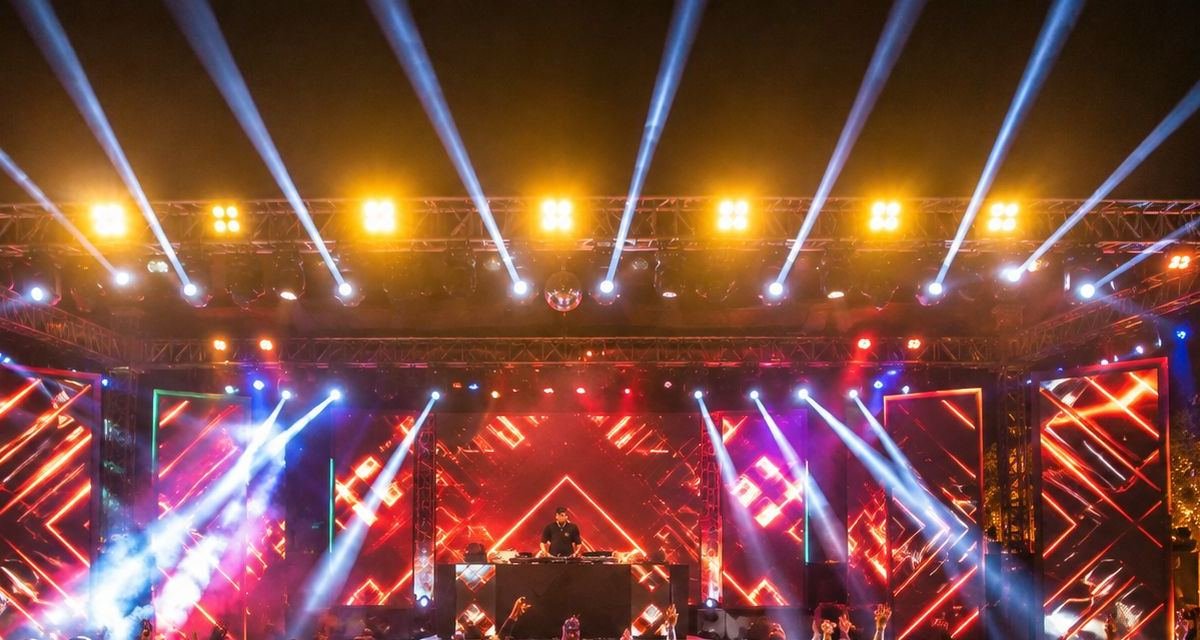
Ask the venue for a slot on the actual stage the day before or the morning of the sangeet. Check the stage size, the steps, the entry and exit points and where each group will wait. Walk through the order once with the anchor and the DJ, and give the DJ every track in one labelled folder with a backup on a pen drive.
For costumes, comfort comes first: safety pins for dupattas, footwear that has been danced in before, and outfits that allow arms to rise. Simple props such as sunglasses, phulkari dupattas or umbrellas add fun, but avoid anything that can fall and trip a dancer, and never use flames or sparklers on stage.
Frequently asked questions
How many practice sessions do we need for a sangeet dance? For a simple group act, two to four sessions plus a full run-through is usually enough. A couple's dance generally needs four to six sessions.
How long should each sangeet performance be? Three to four minutes per act keeps the energy up, with the whole show around an hour.
Can we choreograph the sangeet ourselves? Yes, many families learn from online tutorials, but a choreographer saves time, simplifies steps for beginners and helps structure the show.
How much does a sangeet choreographer charge? It varies by city and experience, from a few thousand rupees per song to well over Rs 1 lakh for a full family package, so compare what is included.
If the family needs a professional to pull it all together, book early: good choreographers fill their winter calendars months ahead. You can find verified choreographers and dance troupes on Set My Event.