

To choose a wedding venue, fix three things first: your realistic guest count for the biggest function, your budget for venue plus food, and your date or date range. Then shortlist venues that fit all three, visit them at the same time of day as your function, and ask the same set of questions everywhere, especially about capacity, parking, outside vendors, music cut-off times, power back-up and charges that are not in the headline quote. The checklist at the end of this article puts all of that on one page.
Banquet hall, marriage palace, lawn or hotel?
Each type of venue suits a different kind of wedding, and many families end up using two, for example a lawn for the mehendi and a palace for the reception.
Indoor banquet halls are compact, air-conditioned and weather-proof. They work well for engagements, ring ceremonies, smaller sangeets and winter receptions. The trade-off is limited space for a baraat entry, fireworks or a big outdoor bar.
Marriage palaces, which you will find along the highways and city edges across Punjab, usually combine an indoor hall with an open lawn, a large parking area and an in-house catering and decor package. They are built for big guest lists and long functions. The package is convenient, but check carefully what is fixed and what you can change.
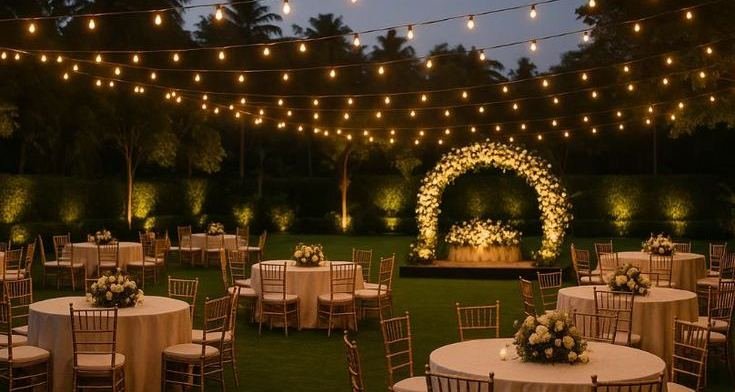
Farmhouses and lawns give you the most freedom on layout, decor and late-night celebrations, and they photograph beautifully. You will usually need to bring in a tent, furniture, lighting, generators, toilets and sometimes even water, so the venue rent is only part of the cost.
Hotels offer rooms for out-of-town relatives, consistent service, and the comfort of everything under one roof. They are often the most expensive per plate and tend to be strictest about music timings, outside vendors and decor.
Do the capacity maths properly
Venues often quote a single impressive capacity figure. Ask whether it is the floating capacity (guests standing and moving around) or the seated capacity, because they can be very different numbers.
For a buffet wedding, think about three things. First, the floor area: a commonly used rule of thumb is around 10 to 12 sq ft per guest for a buffet with some seating, and more for a fully seated dinner, plus extra space for the stage, dance floor, food counters and bar. Second, seating: not everyone sits at once, but elders, families with small children and anyone who has travelled far will want a chair. Third, peak load: Punjabi weddings tend to fill up all at once when the baraat arrives or when the DJ gets going, so a hall that feels spacious at 8 pm can feel packed at 10 pm.
If your list is 500 people and the venue says it holds 500, it is too small. Look for some breathing room.
Questions that save you from surprises
Visit with a notebook and ask every venue the same questions. These are the ones that matter most.
1. Can we bring our own caterer, decorator, DJ, photographer or bartender? Many venues have empanelled vendors or charge a fee for outside ones. Get the policy and any fee in writing.
2. What time must music stop, and is that indoor or outdoor? Outdoor loudspeakers are generally restricted late at night under national noise rules, and local enforcement varies. Ask the venue what its actual cut-off is, and check local rules for an outdoor function.
3. How many cars can park, and is there valet or parking staff? Parking spilling onto the main road is one of the most common wedding-day complaints, and it matters even more when the baraat arrives in a convoy.
4. Are rooms available for the family, and how many? You need at least one room for the bride or groom to get ready, and ideally a couple more for close family to rest and change between functions.
5. What is the power back-up? Ask whether the generator covers the whole venue including air-conditioning, lights and the DJ, or only emergency lighting, and whether diesel is charged extra.
6. What happens if it rains? For any outdoor function, there should be a covered or indoor alternative available on the same day, or the option to put up a waterproof tent at a known cost.
7. What exactly does the quote include? Ask about GST, service charges, extra hours, decor restrictions, the cost of the bridal room, cleaning, security deposits and any minimum food or bar billing.
Hidden charges to look for
The headline rent or per-plate rate is rarely the final number. Common add-ons include taxes, a corkage or bar licence fee if you serve alcohol, fees for outside decorators or caterers, generator diesel, charges per extra hour, a separate rate for using the lawn as well as the hall, mandatory in-house decor, and a security deposit with unclear deduction rules. Ask for a sample final invoice from a recent wedding, with names removed, so you can see what other families actually paid on top.
Visit at the right time
See the venue at the same time of day as your function. A lawn that looks lovely at noon can be dark, dusty or full of mosquitoes at night, and a hall that seems cool in the morning can struggle once 400 people are inside. Use the toilets, check the bridal room, look at the kitchen if you are bringing your own caterer, and walk the route the baraat will take from the gate.
Printable venue checklist
- Date available, with the booking confirmed in writing
- Floating and seated capacity for each area
- Floor area, stage size and dance floor space
- Indoor back-up for any outdoor function
- Parking capacity and valet or parking staff
- Outside caterer, decorator, DJ and bar allowed, and any fees
- Music cut-off time, indoor and outdoor
- Rooms for the couple and family, and how many are included
- Generator capacity and what it covers
- Air-conditioning or heating, and whether it is enough for a full hall
- Clean, sufficient toilets for the guest count
- Wheelchair or step-free access for elderly guests
- Space and route for the baraat and doli
- Fire exits and extinguishers in place
- Full list of taxes, service charges and extra-hour rates
- Advance amount, payment schedule and cancellation or date-change policy
- Security deposit amount and refund conditions
Frequently asked questions
How early should we book a wedding venue in Punjab? For dates in peak season, popular marriage palaces and hotels can fill up months in advance. Booking six months or more ahead is wise, and earlier for auspicious dates.
Is a marriage palace cheaper than a hotel? Often, especially for large guest lists, because palaces are designed for big weddings and bundle food and decor. But compare the full cost, including what you would pay for rooms elsewhere, rather than just the per-plate rate.
What should be in a venue booking contract? The date and timings, the exact spaces you are renting, capacity, food or package details, vendor rules, music cut-off, all taxes and extra charges, the advance and payment schedule, and the cancellation and refund policy.
Can we hold the Anand Karaj and the reception at the same venue? Anand Karaj takes place in the morning at a gurdwara, so most families book a separate venue for the lunch or the evening reception. Ask the venue whether it can handle a quick turnaround if you are hosting lunch there straight after.
When you have your shortlist, you can compare verified wedding venues on Set My Event and contact them directly to check dates and packages.